


Why Granola doesn't use a bot
Running locally gives a better experience, but it also means thinking differently about transparency. Here's how we help people let others know when Granola is transcribing.
We believe in the power of great tools, and few have lasted like the humble notepad. Hundreds of years on, it's still one of the fastest, most reliable ways to capture an idea and think clearly.
We designed Granola to be the evolutionary successor to the notepad: a notepad that writes itself. To do that, Granola needed to be just as simple and reliable as a regular notepad. It had to be available wherever you are, work the instant you open it, and behave the same way in every conversation.
Capturing audio was the key to making that possible. Other products solved this with meeting bots, but we never seriously considered that approach. Bots don't work for in‑person meetings. They behave differently across different meeting platforms, and worst of all, they're incredibly awkward. A creepy third party lurking in the corner of every call.
So we took a different approach. We built Granola as an app that uses your computer's system audio and microphone. That means it works the same way whether the conversation is scheduled or spontaneous, in person or online. Zoom, Meet, Slack Huddles — it doesn't matter. Just open Granola and let it start transcribing.
We made another design choice early on: even though Granola would process the audio in meetings to transcribe it, we don't record or retain it. Yes, audio recordings can be useful, but we wanted Granola to feel like a notepad, not a recorder. The goal isn't to create a record of every conversation; it's to capture what matters to help you stay present and get more done.
How Granola stays transparent without a bot
Running locally comes with one trade-off: unlike a meeting bot, Granola isn't automatically visible to other participants. We think that's an important trade-off to acknowledge, because it means users need another way to let people know when Granola is being used.
We've built features to help. They take a couple of minutes to set up, but once enabled they make transparency almost effortless, whether you're using Granola on your own or rolling it out across an organisation:
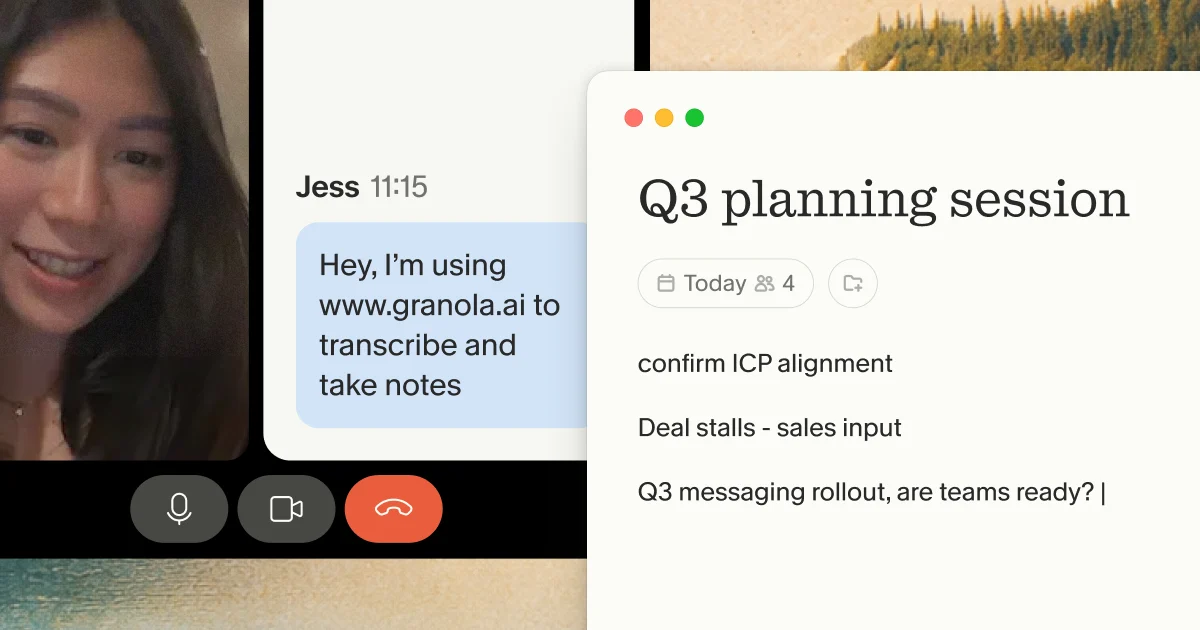
Automatic chat message: Granola can automatically post a message in the meeting chat when transcription begins.
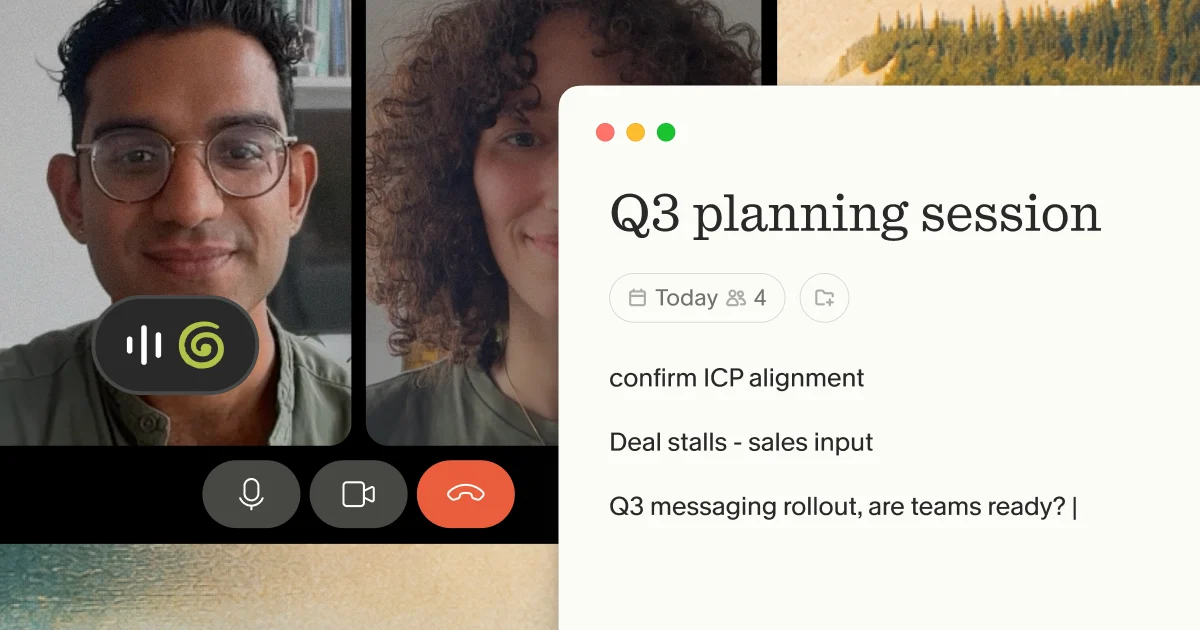
Video watermark: While Granola is transcribing, a persistent watermark appears on your video so everyone in the meeting knows it's active.
Both run automatically and stay out of the way, so everyone in the meeting knows Granola is on.
Of course, no single approach works everywhere, particularly for in-person conversations. That's why the simplest solution is still the best: tell people you're using Granola. Depending on where you live, you may be required by the law to get someone's permission to transcribe them. So every time you start taking notes, Granola reminds you to ask.
We don't think there's a one-size-fits-all answer to transparency, consent and governance. They're nuanced topics, and the right approach depends on the context. What's acceptable in a meeting, on a phone call, or across a table is still being worked out. We want Granola to play a thoughtful role in shaping where those norms end up.
Enterprise controls
Transparency is only one part of the picture. Granola also includes configurable transcript retention and workspace-level administrative controls so IT and security teams can deploy it in a way that matches their privacy, governance, and compliance requirements.
We're continuing to invest in transparency and governance, with a dedicated team focused on building features that help individuals and organizations use Granola responsibly.
We'd love your feedback. If your organization has requirements or use cases we haven't covered, get in touch at hey@granola.so. We'd be happy to talk through what's possible and hear what you'd like to see next.
And if building products like this sounds interesting, check out our careers page. We'd love to hear from you.

Chris Pedregal, Cofounder & CEO

Sam Stephenson, Cofounder, design