





How to run a skip-level meeting: A manager's guide
July 24
TL;DR: Skip-level meetings are powerful tools for surfacing what people actually think, but they fail when employees feel interrogated or middle managers feel bypassed. To surface honest feedback, leaders must prioritize psychological safety and active listening. Run them quarterly by default, shift to monthly during major transitions, and share only aggregated themes with middle managers, never attributed quotes. This guide also covers how to use Granola to capture the signals that matter, so you can stay present in the conversation and leave with structured notes you can act on.
Skip-level meetings often fail before they start. Employees walk in guarded, give carefully worded answers, and leave relieved it's over. The senior leader walks away with a polished version of reality rather than the honest picture they needed.
The problem is rarely intent. It is execution. When leaders treat skip-levels like informal performance reviews, or lead with evaluation rather than curiosity, employees go quiet at exactly the moment you need them to open up. This guide gives you the cadence, structure, questions, and documentation approach to run skip-levels that actually surface honest signal.
Understanding the skip-level meeting goal
You run a skip-level meeting by sitting down with employees who report to your direct reports, bypassing one layer of management. You're there to create alignment across the company and gather honest feedback, not to evaluate performance. You're listening for patterns, not adjudicating individual situations.
How skip-levels build team trust
Skip-levels build trust across management layers because they signal that leadership cares about what happens at the ground level. Employees who see that their input shapes decisions become more engaged. Skip-levels make you accessible in a way that organizational charts don't. Employees who see senior leaders as people they can talk to, rather than distant decision-makers, raise concerns early rather than waiting until they resign.
A skip-level is not a forum for airing grievances about colleagues. The goal of a skip-level is to catch misalignment before it becomes a resignation. When employees understand the purpose is learning how the team actually works, not personal evaluation, they participate more honestly.
Realizing the ROI of skip-level meetings
The business case for skip-levels is straightforward: You're investing 30-45 minutes per conversation to avoid multi-month recruitment cycles and the institutional knowledge loss that comes with turnover. The return only materializes if you run the meetings well enough to get past surface-level answers.
Extract genuine signals from skip-levels
Surface-level answers come from surface-level questions. "How is everything going?" invites "pretty good." The questions that draw out honest answers are open-ended, specific, and create space for reflection rather than quick status updates. Ask about friction, not just wins. Ask what they would change, not just what is working.
When you ask truly open questions and then go quiet, most people will fill the silence. That silence is where the most useful signal lives. Granola is built for exactly this kind of active discovery work, where staying present matters more than capturing every word manually.
Spot red flags in skip-level meetings
Burnout and disengagement have observable patterns. Watch for hedging language like "I've been a bit overwhelmed" or "it's been hard to prioritize," which often masks deeper capacity problems. Employees uncomfortable discussing mental load directly tend to soften their real situation.
High-performers going quiet in meetings they previously engaged with actively is a particularly telling signal, as is a drift toward "ASAP" language for ordinary requests, canceled PTO, and spikes in after-hours messages. Signals that cluster across multiple team members in the same cycle point to a pattern across the team, not an individual one.
Determining your skip-level meeting cadence
The right cadence balances team insight against calendar sustainability. There is no universal answer, but there is a clear framework for finding yours.
Running skip-levels every quarter
For most organizations, a quarterly cadence is the practical standard. It gives enough time for changes to materialize between conversations, so you're not asking the same questions in a loop. Quarterly also aligns naturally with product cycles, planning seasons, and review periods, which means what you hear can inform decisions while they're still being made. Meet each skip-level team member every quarter as the default, stretching the interval to six months only for very large teams.
When to shift to monthly skip-levels
Shift to monthly during major company transitions: Restructuring, M&A, rapid growth that creates management span problems, or leadership changes that generate uncertainty. During these periods, leadership communication gaps widen quickly. More frequent skip-levels let you close that gap before anxiety hardens into disengagement or attrition.
High-stakes confidentiality applies here too. Before running skip-levels during a sensitive transition, brief your middle managers and establish clear boundaries around what can be discussed. If there are topics you can't address openly due to timing constraints, say so directly rather than deflecting vaguely. To prevent meeting fatigue, cap your skip-level blocks at two or three per week and treat them as protected focus time rather than calendar filler.
Reducing anxiety in skip-level conversations
An employee receiving a calendar invite from someone two levels above them will, in most companies, assume it's bad news. Reducing that default anxiety is your responsibility, not theirs.
Brief your team before skip-levels
Send a clear, written explanation to the broader team before you start the calendar invites. Explain what skip-levels are, why you're running them, and what will and won't be shared afterward. Transparency at the announcement stage sets the psychological frame for every individual conversation that follows. Employees who understand the purpose before the meeting starts arrive with lower anxiety and more useful things to say.
Allow employees to opt out
Making participation voluntary removes the sense of obligation that generates the most guarded answers. An employee who chooses to attend a skip-level is meaningfully more likely to engage openly than one who felt they had no choice. Trust accumulates across cycles when people see that opting in produces outcomes, not consequences.
Determine internal disclosure limits
Before the first meeting, decide what you'll share with middle managers afterward, and be explicit about this boundary with both parties. The framework that works: Aggregate themes get shared, attributed quotes do not. You tell a middle manager that several people raised concerns about tooling capacity. You don't tell them which individuals said it or what words they used.
Designing an effective skip-level meeting
30-45 minutes per person
Thirty minutes is often enough for experienced practitioners who have built rapport across previous cycles. Forty-five minutes works better for first-time skip-levels, when you need time to establish trust before useful conversation can begin.
Prepare direct reports for skip-levels
The way you brief your middle managers determines whether skip-levels strengthen or damage the management layer. A framing that works consistently:
"I'm starting skip-level conversations with your team to build relationships and understand how strategy is landing at the ground level. You may hear new questions or feedback from your team members afterward, and that's healthy. I'll share patterns I notice with you so you can act on them. These meetings are for my learning and for improving how the team works, not a review of your performance."
Follow this with three specific reassurances:
- Individual quotes will not be attributed to specific team members in any feedback you share.
- Skip-levels will not influence their performance reviews or compensation discussions.
- You will debrief them after each cycle with aggregated themes, not individual commentary.
Drafting effective meeting prompts
Prepare five to seven prompts rather than a fixed script. Prompts give you a foundation to return to if the conversation stalls, but allow candid dialogue to take priority. Good prompts are open-ended and invite reflection: "What's one thing that would make your work meaningfully easier?" surfaces more actionable insight than "Is there anything I can do to help?"
Building rapport early in the meeting
Start with something low-stakes: A project they've recently mentioned, something they're working on that interests them, or a recent team win. This warm-up is not small talk for its own sake. It calibrates the conversational tone and signals that you're present and curious about them as a person, not just as a data source for team health metrics.
Prioritize active listening over speaking
The most common skip-level mistake is talking too much. Aim to spend the large majority of the meeting listening. You can only maintain that balance if you're not simultaneously trying to write notes. When you look down to type during a sensitive answer, you break eye contact at the moment an employee is deciding whether to keep going or pull back. You lose the answer and the trust.
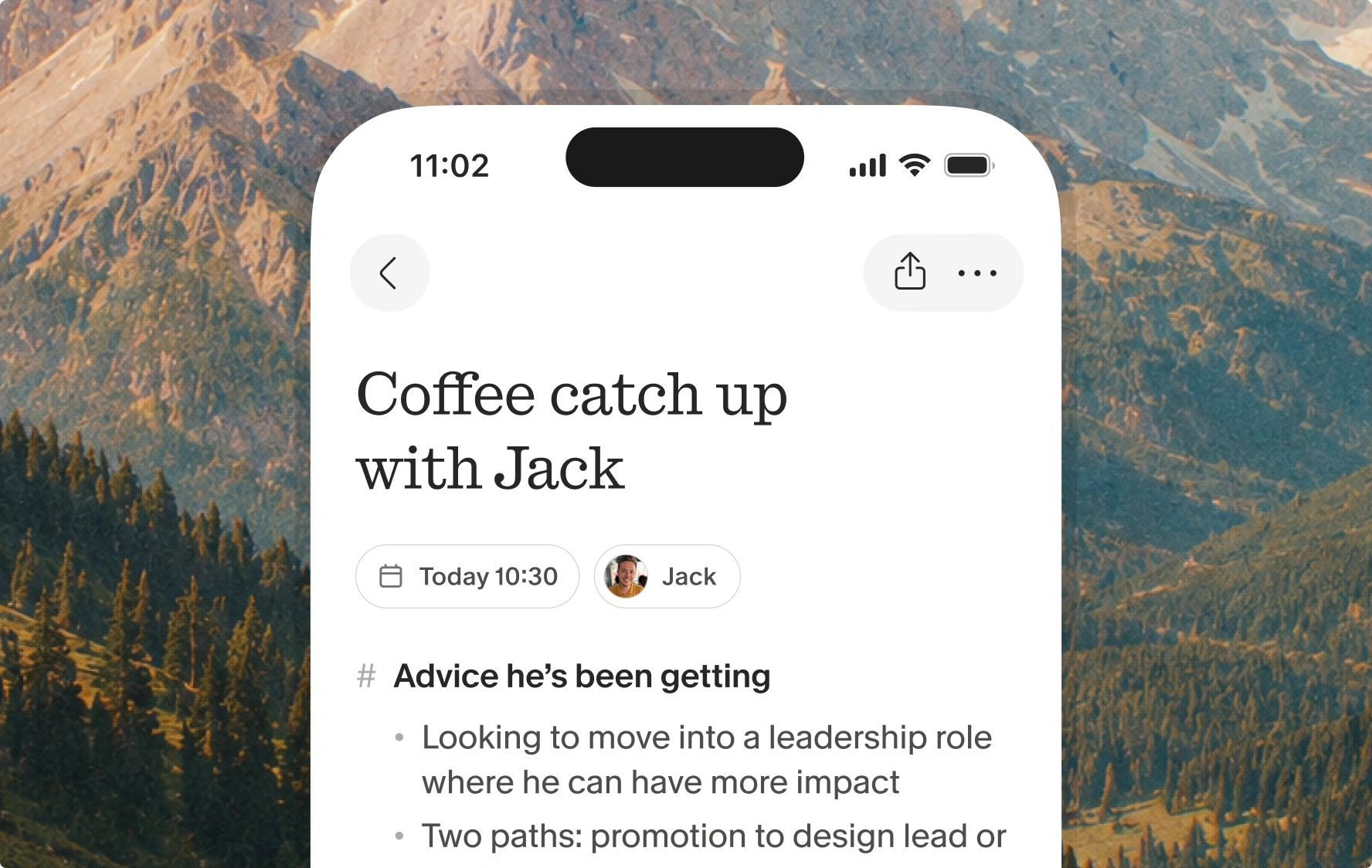
Granola's AI-enhanced notes let you jot a few keywords during the conversation and let the AI fill in the full context from the transcript afterward. Your notes stay in black and AI additions appear in gray, so you control what stays. This means you stay fully present in the room and still leave with accurate, structured documentation.
Track progress on identified issues
Commit publicly to following up on at least one or two themes from each skip-level cycle. Participation quality in subsequent cycles improves significantly once employees see their input produced a visible change. Use shared folders in your documentation tool to organize skip-level notes by team or quarter, making it easy to review what you committed to previously and whether you delivered.
How to document key skip-level takeaways
Automating skip-level meeting notes
Good skip-level documentation should support the conversation rather than compete with it. The aim is to leave with an accurate record of the themes that emerged while giving the person in front of you your full attention.
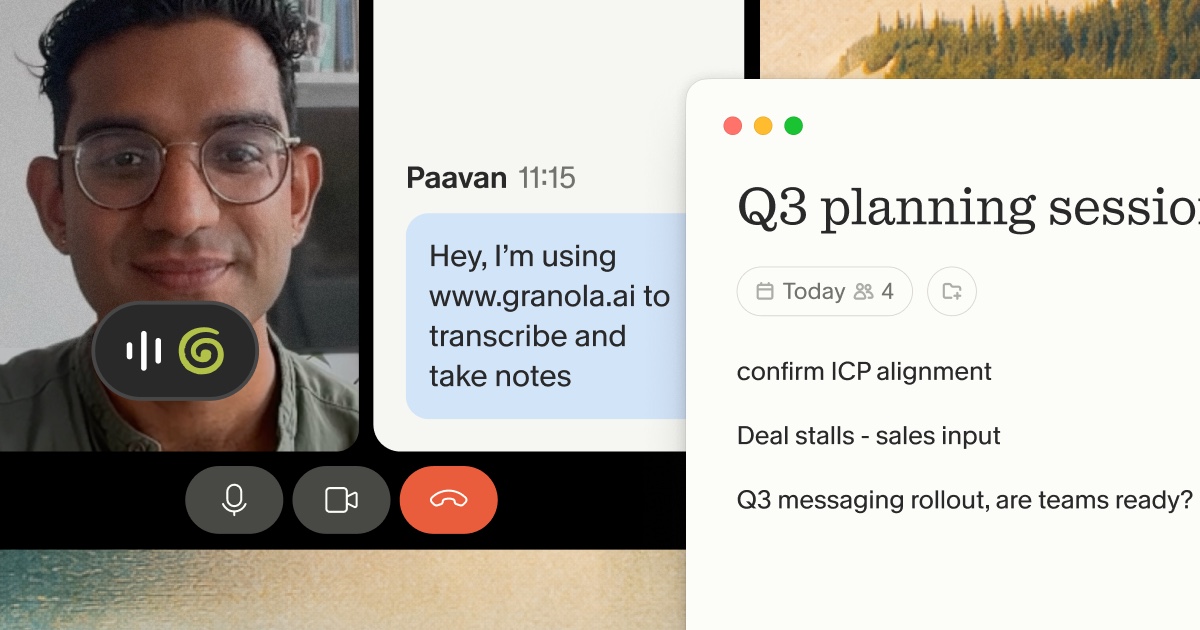
Granola transcribes device audio directly without joining as a visible participant, so the call stays a conversation rather than a recorded session. Granola can post an automatic chat message when transcription starts, or display a watermark, so participants know transcription is active. Audio is captured, transcribed in real time, then deleted, leaving only the transcript. For detail on Granola's transparency features,the consent and privacy documentation explains both options.
Connecting signals across skip-level chats
The full value of skip-levels is not in any single conversation. It's in the patterns that emerge across conversations, teams, and quarters. Granola's folder-level chat lets you query across all your skip-level notes simultaneously, with source-linked citations that point back to the original conversation.
Ask "What are the recurring operational bottlenecks mentioned in my skip-levels this quarter?" and the AI searches every note in your folder, surfaces the patterns, and cites the specific conversations they came from. This is the difference between isolated feedback sessions and what you learn across meetings.
From raw skip-level feedback to team impact
Map recurring team pain points
Translate qualitative themes into findings that connect to decisions already being made. Multiple people flagging difficulty getting engineering responses points to unclear response SLAs that need definition and communication. When people arrive without reading the agenda, that is a preparation problem, not a motivation problem. Theme clusters like these turn internal team pain into actionable input rather than archive material.
Turn feedback into team impact
When sharing back with middle managers, lead with themes and follow with suggested actions. A report that says "morale is suffering" gives a manager nothing to act on. A report that says "three themes emerged around communication lag during the transition, uncertainty about team structure, and tooling support gaps" gives them three specific areas to address.
Treat negative feedback as data, not criticism. The most common failure after the meeting itself is a defensive response to difficult findings. Your reaction to feedback in this cycle shapes how much people share in the next one.
Consider committing to one or two concrete changes per skip-level cycle, and communicate those changes back to the team explicitly: "Based on conversations across our last round of skip-levels, we're adjusting our cross-team communication protocol." This closes the feedback loop and demonstrates that participation produces outcomes. Without this step, skip-levels become another meeting that leads nowhere.
Essential skip-level meeting questions
Structure your questions across three tiers. This table gives you a ready-to-use bank organized by conversational phase:
| Rapport building | Operational health | Strategic alignment |
|---|---|---|
| What's a project you've felt good about recently? | Where are you hitting unexpected friction? | How do you see our current strategy landing with your team? |
| What's one thing that's been energizing about your work? | What's one thing that would make your work meaningfully easier? | What do you think we're missing about our customers? |
| How are you finding the team dynamic lately? | Where do you see us repeating conversations we've already had? | If you were making decisions at my level, what would you change? |
| Is there anything you've wanted to work on that you haven't had space for? | What slows things down more than it should? | Where do you feel most uncertain about our direction? |
| What's something you learned recently that surprised you? | Where are communication patterns creating confusion? | What's one thing leadership could do to make your work easier? |
Capturing insights during skip-level sessions
The keyword approach works well in practice: Jot two or three words during the conversation to anchor key moments ("tooling issues," "unclear ownership," "excited about roadmap"), and let Granola pull the full context from the transcript when you enhance your notes afterward. Granola's AI-enhanced notes show exactly how the enhancement process works. Your rough notes guide the AI toward the moments that mattered to you, so the output reflects your priorities rather than a generic summary of everything that was said. For skip-levels specifically, Granola Recipes let you create saved prompts that extract recurring friction themes across every session consistently, giving your skip-level documentation a repeatable structure without forcing a rigid template onto the conversation itself.
Improving skip-level attendance
High turnout comes from clear communication about purpose, easy scheduling, and visible follow-through from previous cycles. When employees see that skip-levels actually led to changes they care about, they make time for them. Keep the scheduling process simple: Use calendar tools that suggest times based on availability, keep the meeting duration to 30-45 minutes, and send a brief agenda the day before so participants arrive prepared.
Try Granola for free. Download the Mac, Windows, iOS or Android app, connect your calendar, and run your next skip-level to see the notes you get afterward. For teams running regular skip-levels, create a shared Granola folder to track themes across conversations and query the full picture at the end of each cycle.
FAQs
Are skip-level meetings performance reviews?
No, skip-level meetings are not performance reviews. They are strategic alignment tools designed to assess how the team is actually doing, gather feedback, and build trust across different levels of the company. Any evaluation framing undermines the psychological safety required to surface honest feedback.
How often should skip-level meetings occur?
For most organizations, a quarterly cadence is the practical standard because it gives enough time for changes to occur between conversations. You can shift to a monthly cadence during major transitions like restructuring or M&A to address team anxiety more frequently.
Should middle managers be present in skip-level meetings?
No, middle managers should not attend. Their presence inhibits open communication and prevents employees from sharing direct feedback about what is slowing work down. Brief middle managers before and after each cycle instead of including them in individual sessions.
Key terms glossary
Skip-level meeting: A meeting where a senior leader sits down with employees who report to their direct reports, bypassing one layer of management to gather direct organizational feedback.
Bot-free capture: A method of transcribing meetings using device audio directly, without a visible AI participant joining the call. Granola supports optional in-chat notifications or a watermark so participants can be informed that transcription is active.
Active listening: A communication technique that requires the listener to fully concentrate, understand, respond, and remember what is being said, rather than simultaneously managing note-taking or other tasks.
Theme-based reporting: The practice of aggregating feedback by recurring pattern rather than individual attribution, protecting participant anonymity while still enabling leadership to act on the signal.