



How sales teams use Granola

Bardia Shahali

Camilla Bier
August 17
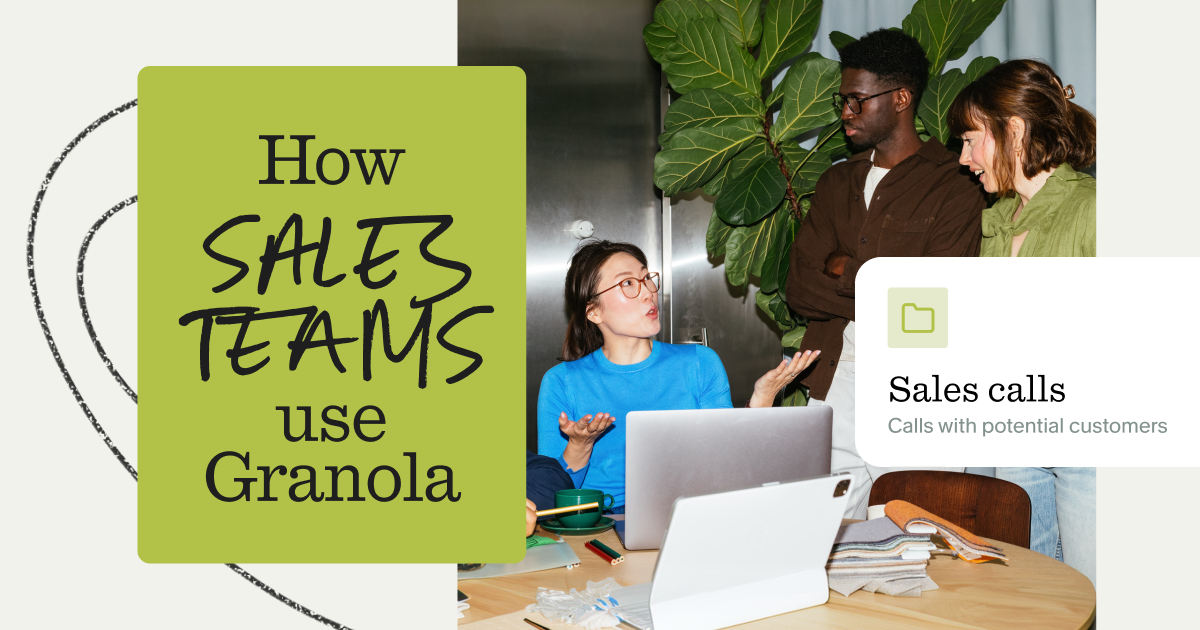
The Granola sales team doesn't just talk the talk. We use Granola almost constantly, and it has transformed how we work — from day-to-day sales calls to the way we make broader business decisions.
If your sales team is anything like ours, you're having hundreds — maybe thousands — of conversations with clients and prospects every week. Most of what sales reps learned in those meetings used to live in someone's memory, notebook or CRM: useful to the rep, but not extending much further.
Now every one of those meetings — every one-to-one, every discovery call, every quick five-minute conversation between calls — gets Granola'd and feeds into a shared context layer that any of us can query at any time. That organisational memory lets us see the big picture before diving into the details, and we're building on it every day.
We would say all that, of course. So let us show you exactly how central Granola has become to our sales strategy. Any team that spends its weeks in customer conversations has access to the same wealth of detail and data. Don't lose a second of it. Put it to work. Here's how we do it.
Less admin, more selling
Let's start with the sales reps who are at the coalface all day, every day. At Granola, we juggle deals that are fairly straightforward — three meetings — with pretty eye-watering ones — infinite meetings — and everything in between. As in any sales team, we have discovery calls, demos, proof-of-concept evaluations and negotiations. You know the drill.
Most of us start the day with Granola-generated meeting Briefs for each external meeting in the calendar. During calls, we're focused on the conversation rather than taking notes. Afterwards, Follow-ups, CRM updates and proposals are drafted automatically, meaning we can move straight into the next customer conversation instead of spending an hour on admin.
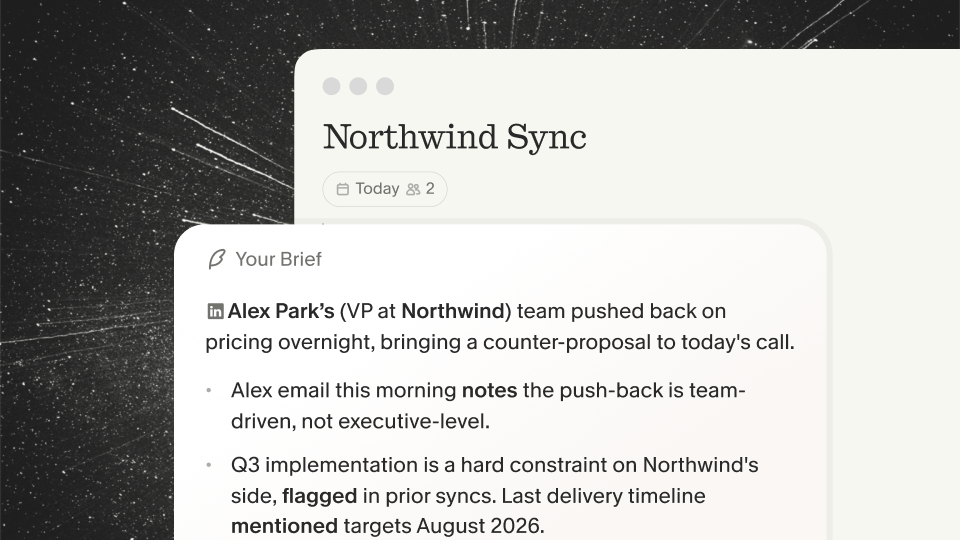
The upshot is that we're not only more present in those meetings, but more efficient at keeping the deal moving forward. Because each meeting note is part of a shared repository, we auto-route the relevant notes to shared folders and team spaces. Any rep can check on any deal at any point. What did this customer ask about retention periods? When is this company's year end? What rate did we agree with a comparable company? Granola can answer in seconds.
The day-to-day of it all
Recipes are a powerful feature that our sales team uses all the time. In Granola, Recipes are pre-written prompts that we pair with all that shared conversation history to pull out genuinely useful insights.
Our most-used Recipe has our discovery framework baked in. It helps reps understand the gaps in their knowledge — essentially AI-driven sales coaching. We also use Recipes to send updates about our strategic deals into Slack, so everyone has visibility into what's going on.
Granola doesn't have a native coach, but we do have the potent combination of Granola Chat and Recipes. Add a Recipe that already knows everything you need to know about, for example, privacy at Granola, and you can ask mid-meeting: "Help me answer this question." It will give you the information you need in the moment — no "I'll have to check on that and get back to you."
Having a reliable prompt in the meeting means you can answer accurately without scrambling for the right wording. Templates also help us pull the right data at the right point in the process, creating a uniform set of notes that fits into our CRM and other systems.
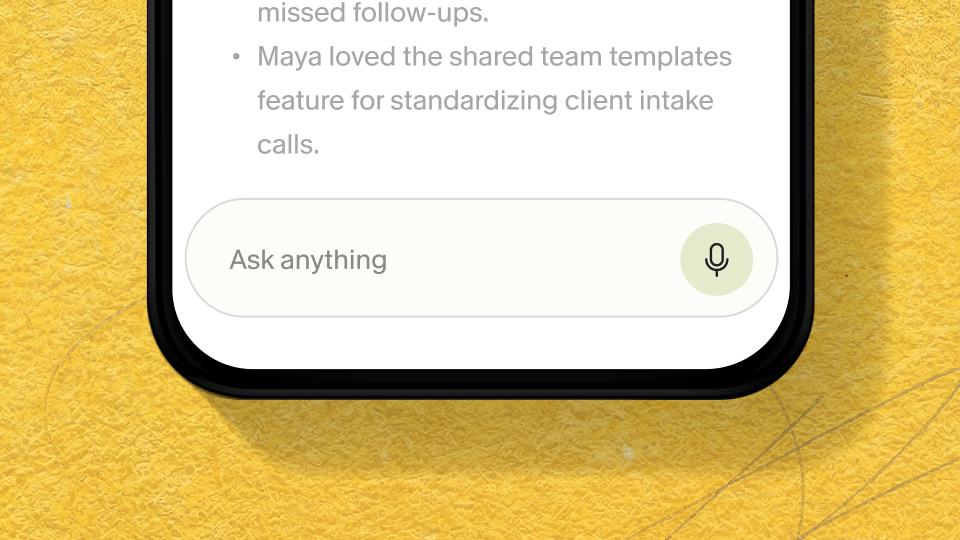
Follow-ups automatically create emails based on the meeting that just ended, so they can be sent immediately. That's huge for a team in back-to-back meetings and calls. If a follow-up email doesn't get sent immediately, it usually means a 24-hour delay. A whole day in the lifecycle of an active deal is a big delay.
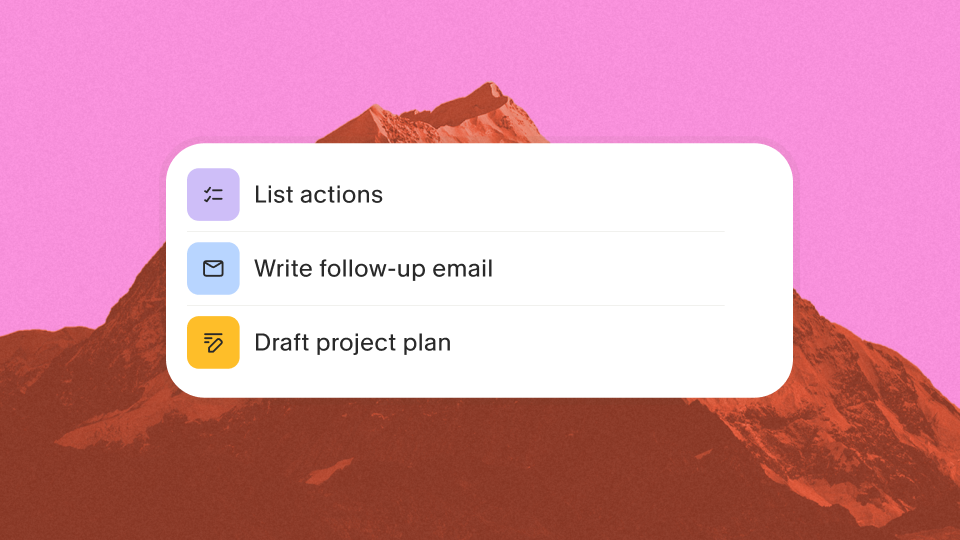
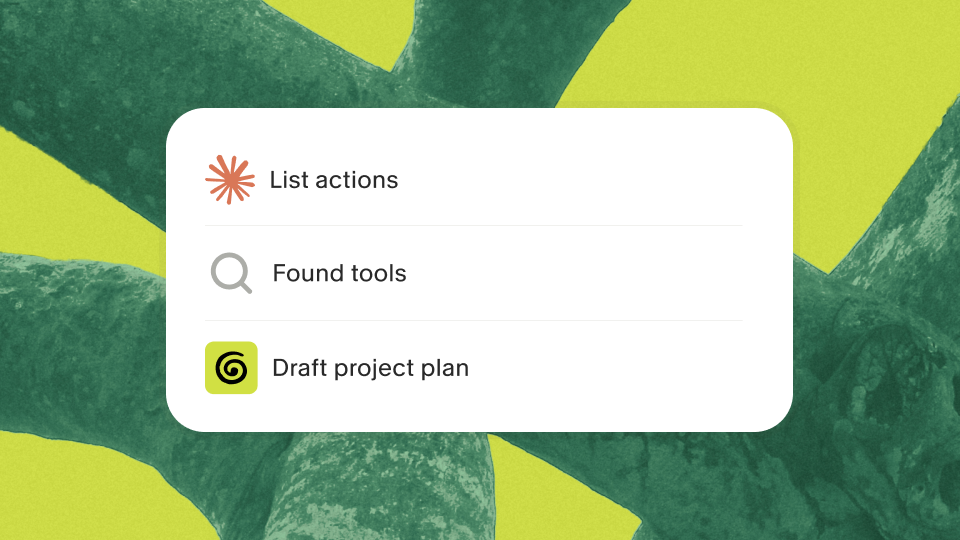
For more bespoke follow-ups and clearer views of a deal, we route meeting notes into Claude Cowork using the Granola MCP, then combine them with external data from Attio, email and wherever else it lives. Reps can use Claude to create business-case summaries informed by all the context we've amassed across the deal. Tasks that used to take hours now happen at lightning speed.
Leaders see the whole picture
Sales leaders managing 20, 50 or 100-plus reps obviously can't be in every meeting. But with each meeting available in Granola, they have access to a context layer that was almost unimaginable five years ago.
Granola has become the thread that ties everything together, whether it's a deal that's closed, in flight or dead as a doornail. It's particularly powerful when we use the Granola MCP to bring that context into Claude Cowork alongside data from the CRM and other sources. Ask something like, "Where is the mid-market team on the US East Coast falling flat?" and we have an accurate, detailed answer in seconds.
The outcomes have been huge. Using AI tools to surface issues and feed conversational context into systems of record means we've improved our deal win rates: gaps are spotted and plugged, and slipping deals are shored up before it's too late. We've vastly reduced rep ramp time, too. Problems bubble up more quickly and get solved before they boil over. Patterns emerge more clearly than they do when you're spending hours squinting at a CRM.
Instead of asking, "What's happening with this deal?" we're now asking, "What are we learning from every deal?"
Better visibility changes how we lead
Instead of relying on second-hand summaries, sales leaders can see how messaging is landing, where deals consistently stall, what objections are emerging and which customer requests appear again and again.
Every customer conversation becomes visible — not to monitor individuals, but to understand the market. We're generating a huge amount of customer intelligence, and now it compounds over time instead of ebbing away. That organisational awareness is unbelievably valuable.
There's no such thing as a wasted meeting anymore. Every conversation adds to the collective picture, and every deal teaches us something — even the ones we lose.
Bardia Shahali, Head of Sales
Camilla Bier, EMEA Sales Lead